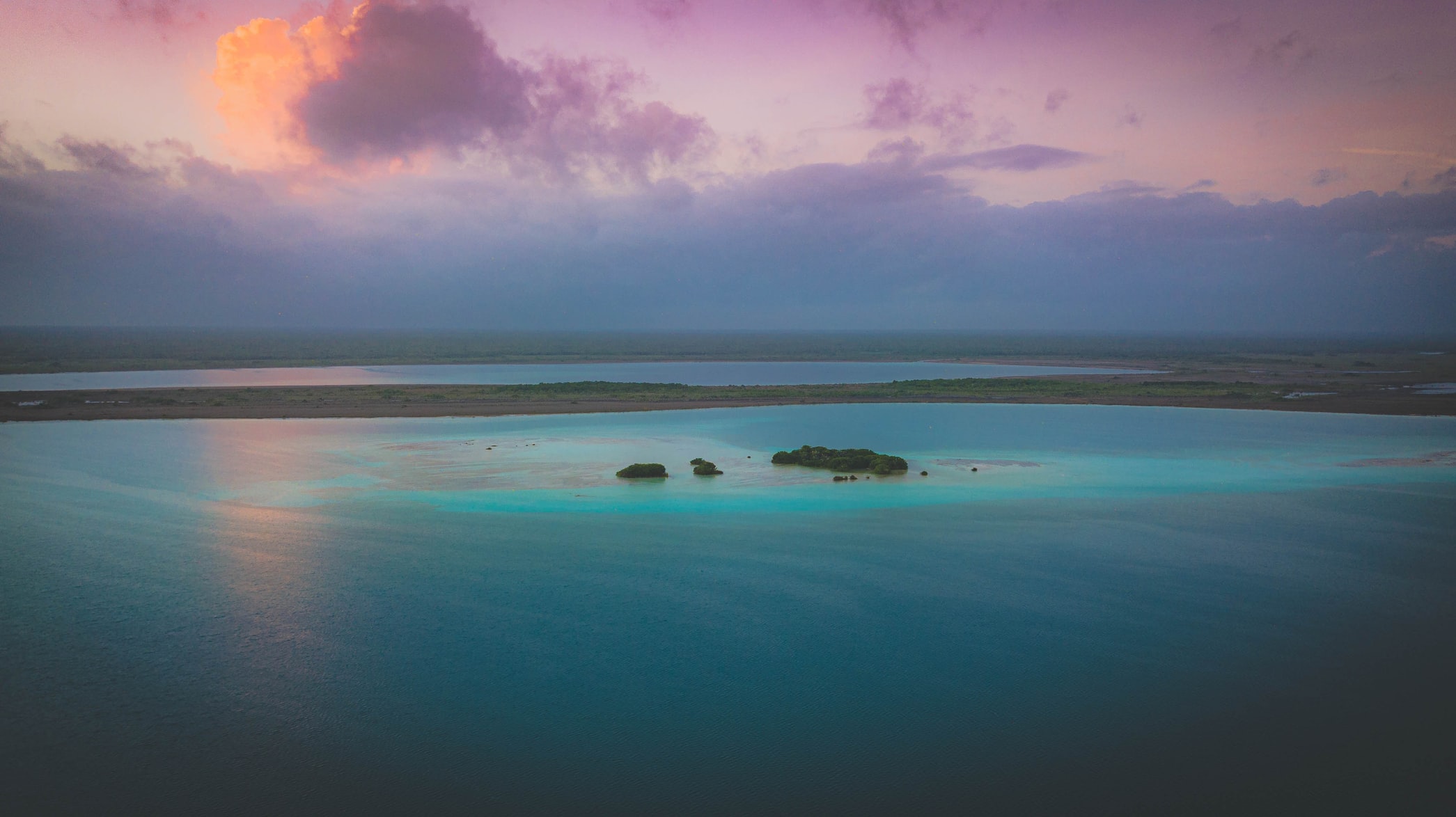
Discover the magic of Bacalar, Quintana Roo's Magical Town, famous for its Lagoon of Seven Colors and rich Mayan history. An essential destination for an unforgettable adventure.
Bacalar, a charming Magical Town located in the south of Quintana Roo, Mexico, is a destination that captivates at first sight thanks to its main attraction: the Lagoon of Seven Colors. This vast expanse of fresh water, approximately 55 km long, owes its name to the multiple shades of blue it displays, a visual spectacle created by the different water depths, white sand bottoms, and sunlight filtering through its crystal-clear waters. The lagoon is not only a visual delight but also a vital ecosystem housing stromatolites, some of the oldest life forms on Earth, especially in areas like Cenote Cocalitos.
The history of Bacalar is as colorful as its lagoon. Founded by the Mayans under the name Sian Ka'an Bakhalal, meaning "near or surrounded by reeds," it was an important commercial and strategic point. During colonial times, the constant threat of pirates led to the construction of Fort San Felipe in the 18th century, an imposing structure that now houses a museum and offers panoramic views of the lagoon. This fort bears witness to countless battles and the region's rich cultural heritage.
Besides the lagoon and the fort, Bacalar invites exploration of its mystical cenotes. Cenote Azul, with its impressive 90-meter depth, is ideal for swimming and diving, while others like Cenote Esmeralda and Cenote Negro (or de la Bruja) are integral parts of lagoon tours. Water activities are the heart of the Bacalar experience: from tranquil kayak or paddleboard rides at dawn to exciting boat or sailboat tours that navigate the Pirate's Channel and Bird Island. This destination offers an authentic cultural experience, an unforgettable adventure, and the opportunity to connect with a natural environment of exceptional beauty, establishing itself as an essential treasure of the Mexican Caribbean.
Local and state authorities announce an ambitious development plan that includes the modernization of essential public services, the expansion of low-impact roads, and a significant improvement in accessibility to all key tourist spots. This plan prioritizes long-term sustainability and the comprehensive preservation of the fragile lagoon ecosystem, seeking a balance between development and conservation.
International research teams, in collaboration with Mexican institutions, confirm the presence of extensive and pristine colonies of these ancient life forms in remote and deep areas of the lagoon. These findings underscore the urgency of implementing more rigorous protection measures, expanding no-navigation zones, and promoting scientific and low-impact tourism to ensure their survival.
Details of the next edition of the acclaimed festival are revealed, featuring the participation of world-renowned chefs. The event will not only celebrate the authentic flavors of the region and innovative fusion cuisine but also highlight ancestral Mayan cooking techniques, promote the use of organic and fair-trade ingredients from local producers, and include workshops on food sustainability and waste reduction.
Various projects led by local Mayan cooperatives, focused on sustainable resource management, offering authentic cultural experiences, and ecosystem regeneration, continue to garner international recognition. These models are presented as inspiring examples of how tourism can generate a significant positive social, economic, and environmental impact.
After extensive renovation, the historic fort reopens its doors with a fully modernized exhibition. Using augmented reality technologies, holographic projections, and interactive narratives, visitors can delve deeply into the history of Caribbean pirates, the Mayan civilization, and the founding of Bacalar, setting a new standard for museography in the region.
With the primary goal of protecting the invaluable Lagoon of Seven Colors, a system is implemented that includes the introduction of fleets of electric and solar-powered boats for all official tourist tours, along with stricter regulations and incentive programs for private operators to adopt clean technologies, aiming to drastically minimize environmental impact.
New signposted and improved routes for hiking and cycling tourism are inaugurated, connecting Bacalar with nature reserves, minor archaeological sites, and Mayan communities. This initiative aims to diversify the tourism offer, promote active and sustainable tourism, and generate direct economic benefits for local populations.
Scientists, conservationists, and policymakers from around the world gather in Bacalar to discuss innovative strategies for the protection of these unique ecosystems, sharing knowledge and establishing collaborations for the long-term preservation of the Lagoon of Seven Colors and similar systems.
Frequently asked questions about purchasing tickets
